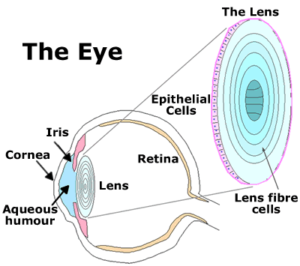
Cataract surgery is the most common surgery performed in US. That doesn’t sound good, does it? Any surgery is hard on your body, especially an eye surgery on your delicate and precious eye.
What Is Cataract?
Cataract is an eye condition where the lens becomes opaque, thus reducing the transmission of light to the retina at the back of the eye, causing unclear vision. You hear that cataract is associated with advancing years, but may occur at any age or could be congenital.
The opacity can be in many different forms and may occur in a hard or a soft eye lens. While some are small and might not require any treatment, others may be large enough to block light and obstruct vision.
How Cataract Can Form
Dr. Bates stated that the opacity of the lens can be from the pressure on the eyeball and eye muscles, which in turn puts pressure on the lens. Pressure on the lens causes poor circulation, resulting in deposit entering between the layers of the lens.
Recent researchers state that free radical damage to the proteins in the lens can promote the development of cataracts.
Per Wikipedia, cataract can be formed when clumps of protein, denatured protein, or yellow-brown pigment is deposited in the lens.
Types of Cataract
There are three primary types of cataracts based on location: nuclear, cortical, and posterior subcapsular.
Nuclear Cataracts
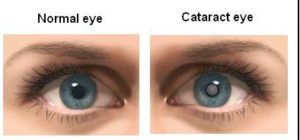
This is the most common type of cataract, caused primarily by the hardening and yellowing of the central portion of the lens. Although the majority of cataracts are not visible to the naked eye, there are some cases where the pupil can appear white because the lens is completely clouded by a very dense cataract.
A nuclear cataract develops slowly and may take many years of gradual development before it affects vision. precipitation
Cortical Cataracts
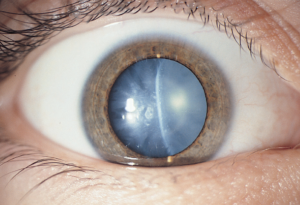
This type of cataract is from white opacities develop in the outside edge of the lens. People with diabetics are at risk for developing cortical cataracts
Symptoms from cortical cataracts include blurred vision, glare, poor contrast and depth perception.
Posterior Subcapsular Cataracts
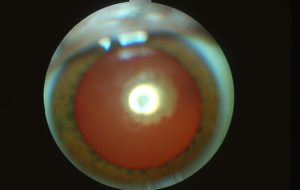
This type of cataract begins as a small opaque area on the back surface of the lens, forming forms beneath the lens capsule.
Subcapsular cataracts can interfere with reading and create “halo” effects and glare around lights. People who use steroids, or have diabetes, extreme myopia, or retinitis pigmentosa may develop this type of cataract. Subcapsular cataracts can develop rapidly and symptoms can become noticeable within months.

After curing numerous people’s worst cases of cataracts without surgery, Dr. Bates stated that “Almost any kind of opacity of the lens has been produced by pressure. Strain of the eye or mind, not the age, is the main cause of developing cataract.”
In this modern world, the following – mostly toxic-related – could be other reasons why cataract develops:
- Previous eye treatments, eye surgeries (e.g.: vitrectomy)
- Exposure to Radiation from x-rays and cancer treatments (Some say that over-exposure to UV causes cataract)
- Eye injuries, electric shock, heat injuries, blunt trauma, direct ocular trauma
- Some medication, specifically steroids (such as Corticosteroids like prednisone, used to reduce inflammation) and antibiotics
- Photosensitizing drugs – antihistamines, sulfa drugs, birth control pills, tranquilizers, antidepressants, oral anti-diabetic drugs, NSAIDS (Advil, ibuprofen)
- Long term use of statins and phenothiazine antipsychotics
- Smoking
- Heavy drinking
- Diabetes – Cataracts are ten times more common in diabetics due to sugar binding with protein molecules.
- Hypertension
- Other eye diseases – retinal detachment, Uveitis (Inflammation inside the eye), retinitis pigmentosa
- Poor digestion, assimilation, and elimination
- Nutrient deficiencies
- Obesity and toxicity in the body
- Elongated eyeball from nearsightedness can put pressure on the lens
- Poor circulation due to chronic mental strain

The following eyesight symptoms could be related to cataract:
- Things always look cloudy, hazy, or streaked with dirt; glasses always seem dirty
- Increased sensitivity to bright light, glare, halos especially in bright sunlight, poor night vision
- Noticeably worsening eyesight, needing stronger prescription often
- Colors appear faded or washed out
- Decreased depth and shadow perception
- Need for brighter or more focused light performing daily functions
Medical Treatment – Surgery
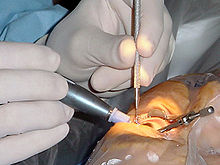
Medical treatment of cataract is surgically removing your eye’s natural lens and implanting an artificial lens. There’re a number of different techniques used in cataract surgery. For more details on cataract surgery, click here.
Prevalent Cataract Surgery Nowadays…
Cataract surgery is the most common surgery performed in US and worldwide. In 2015, 3.6 million cataract procedures were performed in US. That’s about 1 % of total US population! (reviewofophthalmology, 2015)
Cataracts affect nearly 22 million Americans age 40 and older. By age 80, more than half of all Americans have cataracts. Direct medical costs for cataract treatment are estimated at $6.8 billion annually. (Wikipedia, 2017)
Cataract surgery used to be performed when the lens lost its transparency, causing impairment or loss of vision. These days, cataract removal is performed at any stage and no longer requires ripening of the lens. It’s even recommended if a person has a visual needs, offering additional features such as anti-UV, anti-glare, vision correction of monofocal/multifocal/astigmatism/presbyopia, etc.
In some developed countries (like England and US, per researchers), a trend to overuse cataract surgery has been noted, which may lead to disappointing results. It’s easy to go for the quick-fix, especially (1) when you hear that cataract surgery is a safe and effective way to restore vision with serious complications being unusual; (2) the Medicare (for people over age 65) and private medical insurance covers the cost; (3) when you’re told that it’s your age and nothing can be done to heal your cataract.
Per Wikipedia, well over 90% of operations are successful in restoring useful vision, with a low complication rate.
Possible Complications from Surgery
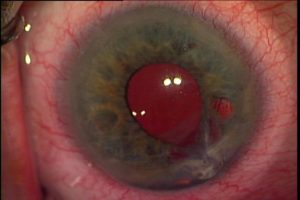
One person who wasn’t so lucky said “My cataract surgery left my iris with holes (see the photo above) and I could have died out of infection.” When he was asked what happened, he said “Who knows? Maybe the surgeon was having a bad day.”
Although complications are relatively uncommon (per Wikipedia), the following could happen after the surgery, weeks, months, or even years later:
- Retinal detachment is an uncommon complication of cataract surgery, which may occur weeks, months, or even years later. Risk of retinal detachment maybe high as 20% for younger age, male sex, complications during surgery, and longer axial length for people with myopia.
- Posterior vitreous detachment
- posterior capsular opacification (also called an after-cataract)
- A rupture of the posterior capsule of the natural lens
- Toxic Anterior Segment Syndrome, a non-infectious inflammatory condition that may occur following cataract surgery. It is usually treated with topical corticosteroids in high dosage and frequency. (Weren’t corticosteroids listed as a possible cause for cataract? Hey, it sounds as if vicious cycle here…)
- Endophthalmitis, a serious infection of the intraocular tissues
- Glaucoma may occur, which may be very difficult to control, and could result in blindness due to high intraocular pressure
- Swelling of the macula or cornea can occur a few days or weeks after surgery
- Displacement/dislocation of the implanted lens may rarely occur
- Unplanned high myopia or hypermetropia due to errors in the measurement of the length and intra-ocular lens power
- Seeing everything tinted with blue often occurs for a few days, weeks or months after surgery
- Floaters commonly appear after surgery
Preventing & Healing Cataract Holistically

We live in an extremely busy world where unhealthy mind, body – foods, drinks, pharma-drugs, surgery – and emotion can get us swathed up in toxicity without us realizing what they’re doing to our precious vision and eyes.
Why not exploring alternative methods to prevent or even heal early stage of cataract without surgery?
… read more on how to heal and prevent Cataract holistically here….
With love and seeing,
Mimi Shekoski, PhD, Natural Vision Teacher | Holistic Natural Health Doctor
References:
en.wikipedia.org/wiki/Lens_(anatomy)
en.wikipedia.org/wiki/Cataract_surgery
en.wikipedia.org/wiki/Cataract
en.wikipedia.org/wiki/Crystallin
http://www.visionaware.org/info/your-eye-condition/cataracts/different-types-of-cataracts/125
http://www.umkelloggeye.org/conditions-treatments/cataract
www.aao.org/eye-health/diseases/cataracts-iol-implants
Black N, Browne J, van der Meulen J, Jamieson L, Copley L, Lewsey J (2008). “Is there overutilisation of cataract surgery in England?”